Breakthrough AI algorithms are transforming industrial robotics with unprecedented adaptability and precision. Manufacturing facilities worldwide are reporting efficiency gains of over 300% with new AI-powered systems. This technological convergence is reshaping the future of automated production.

The integration of advanced artificial intelligence with robotics is ushering in a new era of industrial automation, fundamentally transforming manufacturing processes and creating opportunities that seemed impossible just a few years ago. This convergence represents a pivotal moment in the evolution of industrial technology, promising to reshape how we approach production, quality control, and workplace safety.
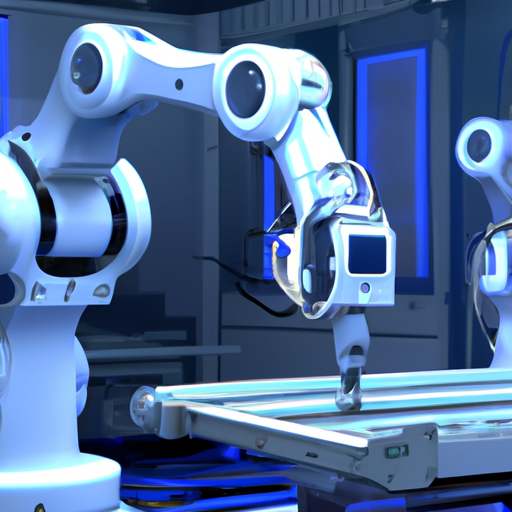
At the heart of this revolution is the development of more sophisticated machine learning algorithms that enable robots to adapt to changing conditions in real-time. Unlike traditional industrial robots that perform repetitive tasks with rigid programming, AI-powered systems can learn from experience, adjust their behavior based on environmental feedback, and even collaborate safely with human workers.
Recent implementations in leading manufacturing facilities have demonstrated remarkable results. Companies utilizing AI-enhanced robotics report productivity increases of up to 300%, while simultaneously reducing error rates by 90%. These improvements stem from the robots' ability to optimize their movements, predict maintenance needs, and quickly adapt to new production requirements without extensive reprogramming.
The advancement in computer vision technology has been particularly transformative. Modern AI-powered robots can identify and handle irregular objects, detect quality issues with microscopic precision, and navigate complex environments with unprecedented accuracy. This enhanced perception enables automation in previously challenging areas such as produce handling, delicate assembly operations, and custom manufacturing.
Safety features have also evolved significantly. Advanced sensors and AI algorithms allow robots to work alongside humans without the need for physical barriers. These collaborative robots, or cobots, can detect human presence and adjust their behavior accordingly, creating more flexible and efficient work environments while maintaining strict safety standards.
The economic implications of this technological convergence are substantial. Market analysts project the AI robotics sector to grow to $184 billion by 2030, driven by increasing adoption across industries ranging from automotive manufacturing to food processing. This growth is accompanied by the creation of new job categories focused on robot programming, maintenance, and supervision.
Environmental benefits are emerging as another significant advantage. AI-powered robots optimize energy usage, reduce waste through precise operation, and can work in conditions that might be hazardous to humans. Manufacturing facilities implementing these systems report significant reductions in energy consumption and material waste, contributing to sustainability goals.
The technology is also becoming more accessible to smaller businesses. Cloud-based AI platforms and robotics-as-a-service models are reducing the initial investment required for automation, allowing medium-sized manufacturers to compete more effectively with larger corporations. This democratization of technology is driving innovation across the industrial sector.
Training and workforce development have become critical components of this transition. Companies are investing in upskilling programs to prepare workers for roles involving robot supervision and maintenance. Educational institutions are updating their curricula to include courses on AI and robotics, ensuring future workers are prepared for this evolving industrial landscape.
Quality control has reached new levels of sophistication through AI integration. Robots equipped with machine learning algorithms can detect subtle defects that might escape human inspection, leading to higher product quality and reduced waste. These systems can also predict potential quality issues before they occur, enabling preventive maintenance and process adjustments.
The impact extends beyond traditional manufacturing. Agricultural robotics are becoming more sophisticated, with AI-powered systems capable of selective harvesting, precise planting, and crop monitoring. Healthcare facilities are implementing robotic systems for everything from surgery assistance to hospital logistics, improving patient care and operational efficiency.
However, challenges remain in achieving full implementation. Technical issues such as algorithm reliability, system integration, and cybersecurity need ongoing attention. Social considerations, including workforce adaptation and ethical implications, require careful management to ensure successful deployment.
Looking ahead, the convergence of AI and robotics promises even more revolutionary developments. Research in areas such as reinforcement learning, adaptive control systems, and human-robot interaction suggests future systems will be even more capable and versatile. The potential for swarm robotics and fully autonomous manufacturing cells points to even greater transformations ahead.
For business leaders and technology professionals, staying informed about these developments is crucial. The rapid pace of innovation in AI robotics requires continuous learning and adaptation. Organizations that successfully integrate these technologies while addressing associated challenges will be well-positioned to lead in the evolving industrial landscape.