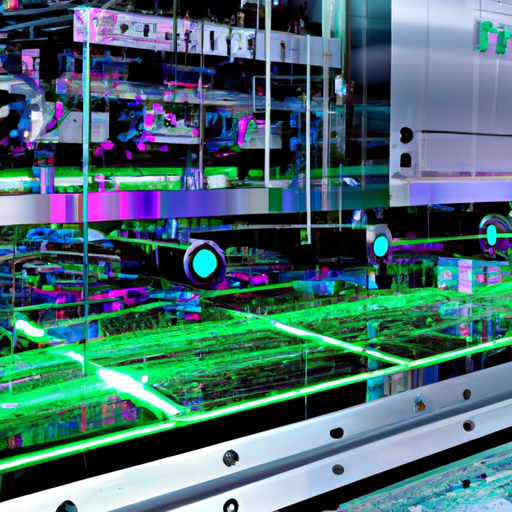
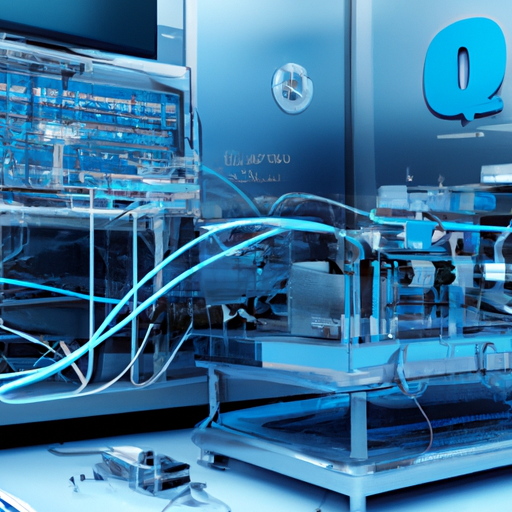
Scientists achieve major breakthrough in quantum computing stability, enabling the first practical commercial applications. Major tech companies announce quantum-powered services for specific industrial use cases. The development marks a turning point in the transition from theoretical to practical quantum computing.
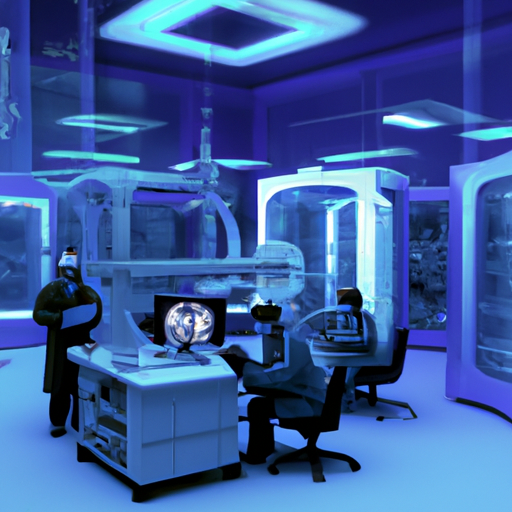
In a landmark development for the field of quantum computing, researchers have announced a significant breakthrough in quantum stability and error correction, paving the way for the first wave of commercial quantum computing applications. This achievement represents a crucial transition from theoretical possibilities to practical implementations, marking a new chapter in computing history.
The breakthrough centers on a novel approach to maintaining quantum coherence, one of the most significant challenges in quantum computing. By implementing a new error correction system that combines traditional quantum error correction codes with machine learning algorithms, researchers have achieved stability periods orders of magnitude longer than previously possible.
This advancement has immediate practical implications. Several major technology companies have already announced the launch of quantum-powered services, focusing initially on specific industrial applications where quantum computers hold a clear advantage over classical systems. These applications primarily target optimization problems in logistics, materials science, and financial modeling.
One of the most promising early applications is in the field of materials science. Quantum computers can now simulate molecular interactions with unprecedented accuracy, accelerating the discovery of new materials for batteries, solar cells, and pharmaceuticals. Several major chemical companies have already begun using these services to explore new compounds and materials with potentially revolutionary properties.
The financial sector has emerged as another early adopter of quantum computing services. Investment firms are using quantum algorithms to optimize portfolio management and risk assessment in ways that were previously impossible with classical computers. The ability to analyze complex market scenarios simultaneously has opened new possibilities for financial modeling and risk management.
Logistics and supply chain optimization represent another key application area. Quantum computers can solve complex routing and scheduling problems that would take classical computers years to process. Several major shipping and logistics companies have reported significant efficiency improvements using quantum-optimized routing systems.
The technical architecture behind these achievements combines several innovative approaches. The new error correction system uses a layered approach, with different correction mechanisms operating at various levels of the quantum system. This redundancy ensures that errors are caught and corrected before they can propagate through the system.
The role of artificial intelligence in managing quantum systems has proven crucial. Machine learning algorithms monitor and adjust the quantum environment in real-time, maintaining optimal conditions for quantum coherence. This hybrid approach of quantum and classical computing has proven more effective than either system alone.
Scalability remains a key focus area. Current quantum systems operate with a limited number of qubits, but the new stability improvements make it possible to plan for larger systems. Several companies have announced roadmaps for scaling their quantum computers to thousands of qubits while maintaining the same level of stability.
The economic implications of this breakthrough are significant. Market analysts predict that quantum computing services could generate billions in revenue within the next five years. Industries ranging from pharmaceuticals to aerospace are investing heavily in quantum capabilities, recognizing the competitive advantage they could provide.
However, challenges remain. The current generation of quantum computers still requires extremely controlled environments and sophisticated cooling systems. Work continues on developing more practical and accessible quantum computing systems that could operate under less stringent conditions.
The educational sector is responding to these developments by launching new programs in quantum computing and quantum information science. Universities worldwide are establishing quantum research centers and updating their curricula to prepare the next generation of quantum engineers and scientists.
As quantum computing moves from research labs to commercial applications, questions about security and standardization have become more pressing. International organizations are working to establish standards for quantum computing hardware and software, ensuring interoperability and security across different platforms and applications.
The path forward appears both exciting and challenging. While the current breakthrough represents a significant milestone, researchers and industry leaders acknowledge that we are still in the early stages of the quantum computing revolution. Continued investment and research will be crucial to realizing the full potential of this technology.
This breakthrough in quantum computing stability marks the beginning of a new era in computing technology. As more applications move from theoretical possibilities to practical implementations, we can expect to see increasingly sophisticated and valuable applications of quantum computing across various industries.