
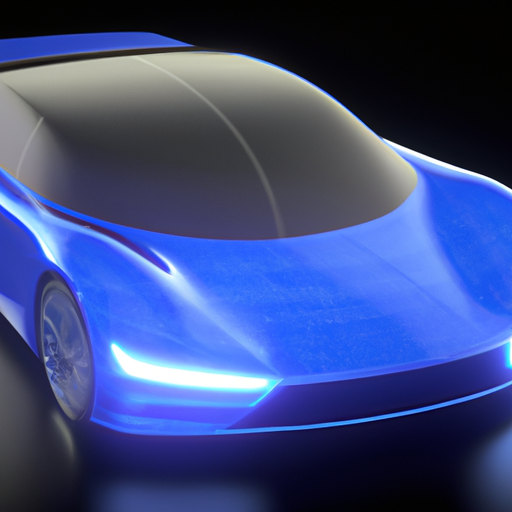
A major breakthrough in solid-state battery technology promises to transform the electric vehicle industry with charging times under 10 minutes and range exceeding 600 miles. The new batteries demonstrate unprecedented stability and longevity in real-world testing conditions. Manufacturing costs are projected to be significantly lower than current lithium-ion batteries.

The electric vehicle industry stands on the brink of a revolutionary transformation with the successful development and testing of next-generation solid-state batteries. This breakthrough promises to address the primary concerns that have historically limited EV adoption: charging time, range anxiety, and cost.
Solid-state batteries represent a fundamental shift from traditional lithium-ion technology. Instead of using liquid electrolytes, these new batteries employ solid materials for ion transport, resulting in significantly improved safety, energy density, and longevity. The implications for the automotive industry are profound.
The most immediate and striking advantage is charging speed. While current EVs typically require 30 minutes to several hours for a full charge, these new solid-state batteries can reach 80% capacity in under 10 minutes. This breakthrough essentially eliminates one of the biggest obstacles to widespread EV adoption.
Range anxiety, another major concern for potential EV buyers, becomes largely irrelevant with this new technology. The enhanced energy density of solid-state batteries enables ranges exceeding 600 miles on a single charge, surpassing even the most efficient gasoline-powered vehicles.
Safety improvements are equally impressive. Unlike traditional lithium-ion batteries, solid-state batteries are non-flammable and more stable at extreme temperatures. This characteristic not only enhances safety but also reduces the need for complex cooling systems, further improving efficiency and reducing costs.
The manufacturing process represents another significant advancement. The new production methods are simpler and more cost-effective than traditional battery manufacturing, with preliminary estimates suggesting a 40% reduction in production costs once at scale.
Durability testing has yielded remarkable results. These batteries maintain over 90% of their original capacity after 1000 charge cycles, significantly outperforming current technology. This longevity could mean that battery replacement becomes a non-issue for the typical vehicle lifespan.
Environmental benefits extend beyond zero-emission operation. The materials used in solid-state batteries are more environmentally friendly and easier to recycle than traditional battery components. This advantage addresses growing concerns about the environmental impact of battery production and disposal.
Major automotive manufacturers have already begun forming partnerships and investing in production facilities. The first vehicles featuring this technology are expected to reach the market within two years, with mass adoption projected within five years.
The implications extend beyond personal vehicles. Commercial transport, including long-haul trucking, stands to benefit significantly from these improvements. The combination of fast charging and extended range could make electric trucks viable for routes that were previously impractical.
The energy grid implications are also significant. Fast-charging capabilities require new infrastructure, but the technology's efficiency reduces the overall strain on the power grid compared to current charging solutions.
However, challenges remain. Scaling up production while maintaining quality control requires significant investment in manufacturing facilities. Additionally, the supply chain for some key materials needs development to meet projected demand.
The economic impact could be transformative. Beyond the automotive sector, this technology could revolutionize energy storage for renewable power systems, potentially accelerating the transition to sustainable energy.
As this technology moves from laboratory to production, it represents more than just an improvement in battery technology - it signals a fundamental shift in how we think about electric vehicles and energy storage. The combination of performance, safety, and cost improvements could finally make EVs the obvious choice for most consumers.