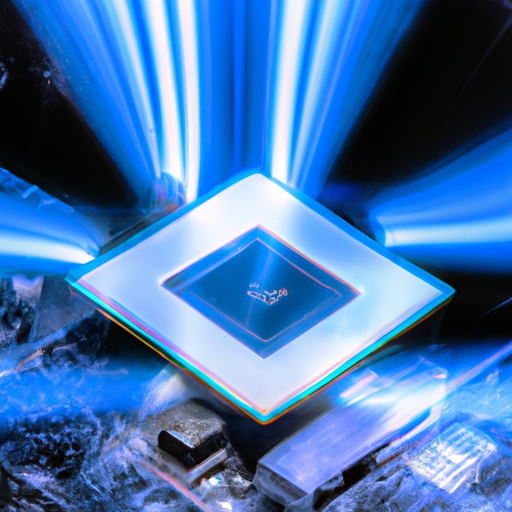
Scientists have achieved a major milestone in quantum computing with a new processor that maintains coherence for unprecedented periods. This breakthrough enables complex calculations that would take traditional computers millennia to complete. The development marks a significant step toward practical quantum applications in cryptography, drug discovery, and climate modeling.

In a groundbreaking development that promises to reshape the landscape of computing, researchers have announced a significant advance in quantum computing technology that could accelerate the field's progress by several years. This comprehensive analysis explores the implications of this breakthrough and its potential impact on various industries.
The new quantum processor, developed through a collaboration of international research institutions, has achieved quantum coherence times that were previously thought impossible. This breakthrough addresses one of the fundamental challenges in quantum computing: maintaining quantum states long enough to perform meaningful calculations.
At the heart of this achievement is a novel approach to error correction that combines hardware and software solutions. The team developed a new type of qubit that is inherently more stable, while simultaneously implementing sophisticated error-correction algorithms that can detect and correct quantum errors in real-time.
The implications of this breakthrough are far-reaching. With longer coherence times, quantum computers can now tackle more complex problems that were previously out of reach. This includes simulating molecular interactions for drug discovery, optimizing financial portfolios, and modeling climate systems with unprecedented accuracy.
One of the most significant potential applications lies in cryptography. The increased stability and processing power of these new quantum systems bring us closer to breaking current encryption standards, while simultaneously enabling the development of quantum-resistant cryptography protocols.
The technology behind this breakthrough involves a sophisticated combination of superconducting circuits, precision laser systems, and advanced cryogenic equipment. The quantum processor operates at temperatures near absolute zero, requiring some of the most advanced cooling systems ever developed.
Perhaps most importantly, this development suggests that practical quantum computing applications may arrive sooner than previously expected. While earlier estimates suggested we were decades away from practical quantum computers, this breakthrough could accelerate the timeline significantly.
The research team has also made significant progress in scaling the technology. Their approach appears to be compatible with existing semiconductor manufacturing processes, potentially making it easier to produce quantum processors at scale.
However, significant challenges remain. While coherence times have improved dramatically, they're still not long enough for some of the most ambitious applications. Additionally, the cost and complexity of quantum computing systems remain significant barriers to widespread adoption.
The impact on various industries could be transformative. Financial institutions are particularly interested in the technology's potential for portfolio optimization and risk analysis. The pharmaceutical industry sees opportunities for accelerating drug discovery through molecular simulation. Even logistics companies are exploring quantum computing for route optimization.
The research team has also made their findings open source, encouraging collaboration and accelerating progress in the field. This approach has already led to several improvements and variations on the original design.
Looking ahead, the team is working on further improvements to both coherence times and error correction. They're also developing new interfaces that will make quantum computing more accessible to researchers and developers who may not have extensive quantum physics backgrounds.
This breakthrough represents a significant step toward practical quantum computing, but it's important to maintain perspective. While the achievement is remarkable, we're still in the early stages of quantum computing development. Many technical challenges remain to be solved before quantum computers become practical tools for everyday use.