Recent quantum computing breakthroughs have achieved unprecedented levels of qubit stability and error correction. Major tech companies are now racing to develop practical quantum applications for various industries. These advancements could revolutionize fields from cryptography to drug discovery within the next decade.

The field of quantum computing has reached a critical inflection point, with recent breakthroughs pushing the technology closer to practical applications. This analysis explores the latest developments, their implications, and how they're reshaping our understanding of computational possibilities.
One of the most significant recent achievements has been the development of more stable qubits with longer coherence times. Traditional quantum computers have struggled with maintaining quantum states for extended periods, but new techniques using trapped ions and superconducting circuits have extended coherence times from microseconds to milliseconds, and in some cases, several seconds. This improvement represents a fundamental shift in the practical viability of quantum computing systems.
Error correction has been another major focus area, with researchers developing more sophisticated quantum error correction codes. These new methods can detect and correct quantum errors without collapsing the quantum state, a crucial advancement for building reliable quantum computers. The achievement of logical qubits with error rates below one percent marks a significant step toward fault-tolerant quantum computing.
The race for quantum supremacy has intensified, with several companies demonstrating quantum computers capable of performing calculations that would be impractical on classical computers. These demonstrations, while still limited in practical applications, showcase the potential of quantum systems to solve complex problems in optimization, simulation, and cryptography.
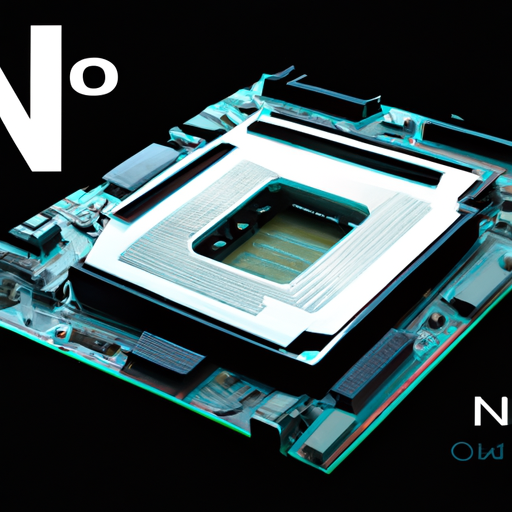
Quantum computing hardware has also seen remarkable progress. New architectures using different qubit types, including superconducting circuits, trapped ions, and topological qubits, are being developed and refined. Each approach offers unique advantages in terms of scalability, stability, and control, contributing to a diverse quantum computing ecosystem.
The software side of quantum computing has evolved in parallel with hardware improvements. New quantum algorithms are being developed that could revolutionize fields such as drug discovery, materials science, and financial modeling. These algorithms take advantage of quantum phenomena to solve problems that are computationally intensive for classical computers.
Industry involvement has accelerated the pace of development. Major tech companies have invested billions in quantum research, establishing dedicated quantum computing divisions and forging partnerships with academic institutions. This collaboration between industry and academia has led to faster innovation and more practical applications of quantum technology.
One particularly promising area is quantum simulation for materials science and chemical reactions. Quantum computers can naturally simulate quantum systems, offering the potential to design new materials with specific properties or understand complex chemical reactions at the molecular level. This could accelerate drug discovery and development of new materials for renewable energy.
Cryptography is another field being transformed by quantum computing advances. While quantum computers pose a threat to current encryption methods, quantum cryptography offers new ways to secure communications that are theoretically unbreakable. The development of post-quantum cryptography is becoming increasingly important as quantum computers become more powerful.
The integration of quantum and classical computing systems is emerging as a crucial area of development. Hybrid approaches that combine the strengths of both systems are showing promise in practical applications. This hybrid architecture allows organizations to begin incorporating quantum computing capabilities into their existing infrastructure.
Quantum networking is advancing alongside computing capabilities. The ability to transfer quantum states between distant quantum computers could enable distributed quantum computing and secure quantum communication networks. Several countries are investing in quantum internet infrastructure, laying the groundwork for future quantum networks.
The challenges facing quantum computing remain significant. Scaling up the number of qubits while maintaining coherence and control is a major technical hurdle. Engineering challenges related to cooling systems, control electronics, and error correction must also be addressed to create practical quantum computers.
Despite these challenges, the field is progressing rapidly. The development of industry-standard benchmarks and metrics for quantum computers is helping to measure and compare different approaches. This standardization is crucial for the maturation of the quantum computing industry.
Looking ahead, the potential applications of quantum computing are vast. From optimizing supply chains and financial portfolios to simulating quantum systems for drug discovery and materials development, quantum computers could transform numerous industries. The technology is approaching a tipping point where practical applications become possible.
The quantum computing landscape continues to evolve rapidly, with new breakthroughs announced regularly. As the technology matures, focus is shifting from proof-of-concept demonstrations to practical applications that can provide real-world value. The next few years will be crucial in determining how quickly quantum computing can transition from research laboratories to commercial applications.