
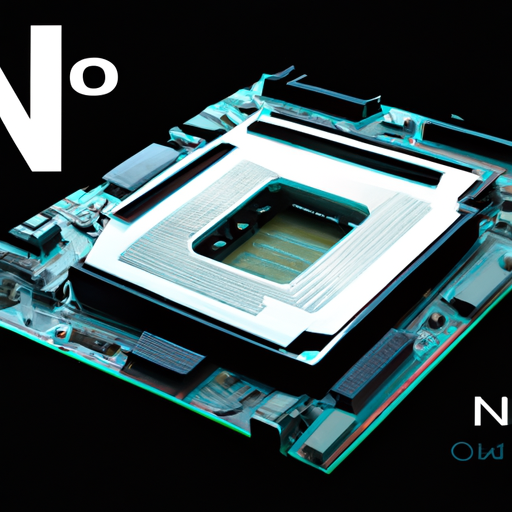
Leading semiconductor companies unveil revolutionary chip designs optimized for AI workloads. These specialized processors promise up to 50x performance improvements for machine learning tasks while reducing energy consumption. The development signals a fundamental shift in computer architecture as AI becomes central to modern computing.
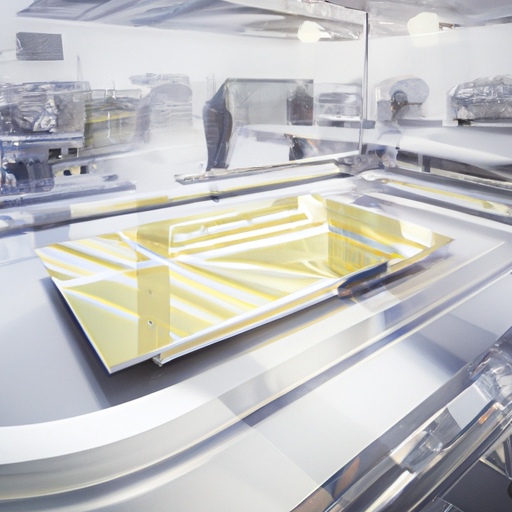
The semiconductor industry is undergoing its most significant transformation in decades as major chip manufacturers unveil new architectures specifically designed for artificial intelligence workloads. These developments mark a decisive shift away from traditional von Neumann architecture, promising unprecedented performance improvements for AI applications while addressing growing concerns about energy efficiency.
NVIDIA, AMD, and Intel have all recently announced new chip designs that fundamentally rethink how data moves between processing and memory components. These AI-optimized architectures feature massive parallel processing capabilities, integrated memory solutions, and specialized circuits for common machine learning operations.
At the heart of this revolution is the recognition that traditional CPU architectures, designed for sequential processing, are poorly suited for the parallel nature of AI workloads. The new designs incorporate thousands of specialized processing units that can simultaneously handle the matrix calculations central to machine learning algorithms.
One of the most significant innovations is the implementation of processing-in-memory (PIM) technology, which reduces the energy and performance costs of moving data between memory and processing units - traditionally a major bottleneck in AI computations. Early benchmarks suggest these new architectures can achieve up to 50 times performance improvement for certain AI tasks while consuming significantly less power.
The impact of these developments extends far beyond data centers and high-performance computing facilities. Edge computing devices, from smartphones to IoT sensors, will benefit from specialized AI accelerators that can perform complex machine learning tasks with minimal power consumption. This enables new applications in autonomous vehicles, smart cities, and industrial automation.
Semiconductor manufacturing processes have also evolved to support these new architectures. Advanced packaging technologies allow for closer integration of processing and memory components, while new materials and 3D stacking techniques enable higher density and better thermal management.
The race to develop AI-optimized chips has sparked unprecedented investment in semiconductor research and development. Major tech companies are increasingly designing their own custom chips, while startups are introducing innovative architectures that challenge traditional approaches to computing.
These developments have significant implications for software development. Programming models and tools are evolving to take advantage of the new architectures, with frameworks like TensorFlow and PyTorch being optimized for the latest AI accelerators. This creates new opportunities and challenges for developers working on AI applications.
Energy efficiency has become a crucial focus of these new designs. With data centers already consuming massive amounts of electricity, the ability to perform AI computations more efficiently could have significant environmental benefits. Some new chip designs show promise in reducing energy consumption by up to 90% compared to traditional architectures for specific AI workloads.
The shift toward AI-optimized architectures is also influencing the broader semiconductor industry. Manufacturing processes, supply chains, and investment patterns are adapting to support the production of these specialized chips. This has geopolitical implications as countries compete to establish leadership in AI chip development and production.
Security considerations are being built into these new architectures from the ground up. Hardware-level features for secure AI computation and data protection are becoming standard, addressing concerns about privacy and security in AI applications.
The impact on the job market is significant, with increasing demand for engineers who understand both hardware architecture and machine learning. Universities are updating their computer engineering curricula to include more focus on AI hardware design and optimization.
As these new architectures mature, we can expect to see even more specialized variants optimized for specific types of AI workloads. This could lead to a more diverse ecosystem of computing solutions, each tailored to particular applications and requirements.
The development of AI-optimized chip architectures represents a fundamental shift in computer design philosophy. As artificial intelligence becomes increasingly central to modern computing, these specialized processors will play a crucial role in enabling the next generation of AI applications while addressing critical challenges in performance and energy efficiency.