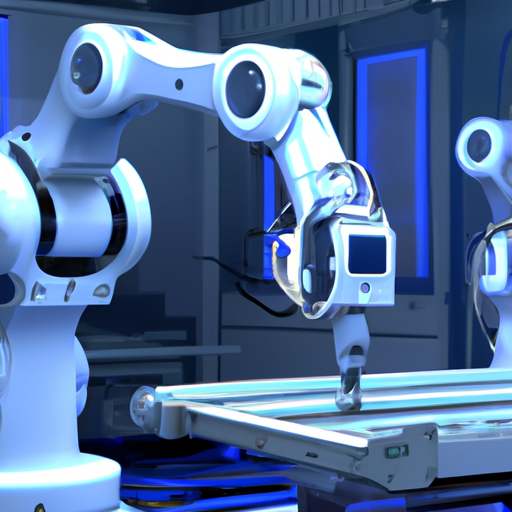
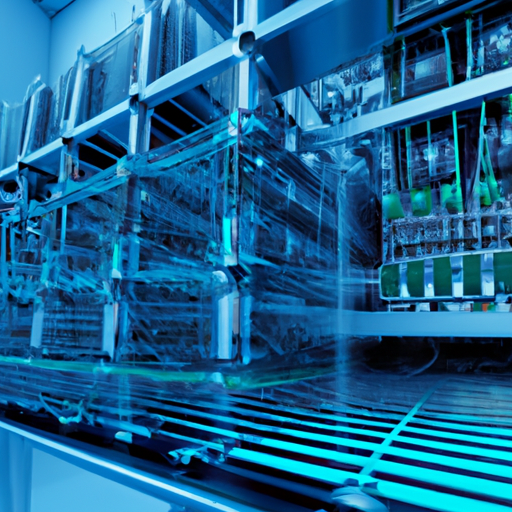
Scientists achieve a major breakthrough in quantum computing with a 1000-qubit processor. The development promises to revolutionize everything from drug discovery to climate modeling. Tech giants are racing to commercialize this groundbreaking technology.
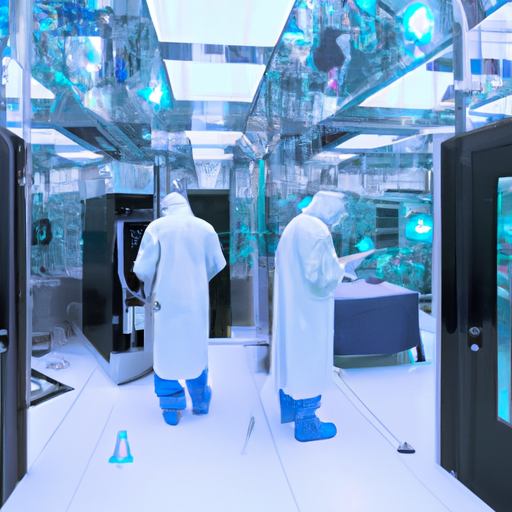
The quantum computing revolution has arrived, marking a pivotal moment in technological history that promises to transform how we process information and solve complex problems. Recent breakthroughs in quantum processor technology have shattered previous limitations, opening doors to computational possibilities that were once confined to theoretical physics.
In a groundbreaking announcement, researchers at a leading quantum computing laboratory have successfully developed and tested a 1000-qubit processor, significantly surpassing previous records and bringing us closer to quantum supremacy. This achievement represents more than just an incremental advance – it's a quantum leap that could accelerate solutions to some of humanity's most pressing challenges.
The fundamental principle behind quantum computing leverages the bizarre properties of quantum mechanics, particularly superposition and entanglement. Unlike classical computers that process information in binary bits (0s and 1s), quantum computers use quantum bits or qubits that can exist in multiple states simultaneously. This parallel processing capability enables quantum computers to solve certain problems exponentially faster than their classical counterparts.
The implications of this advancement stretch across numerous fields. In pharmaceutical research, quantum computers could simulate molecular interactions with unprecedented accuracy, potentially reducing drug development timelines from decades to years. Climate scientists could create more detailed models of global weather patterns, improving our ability to predict and respond to climate change. Financial institutions could optimize investment portfolios and risk assessments with complexity levels previously unattainable.
However, the path to practical quantum computing isn't without its challenges. Quantum systems are notoriously sensitive to environmental interference, requiring extensive error correction mechanisms and sophisticated cooling systems to maintain qubit coherence. The new 1000-qubit processor addresses these challenges through innovative architecture and improved error correction protocols.
Major tech companies are already positioning themselves in the quantum computing race. IBM, Google, and Microsoft have made substantial investments in quantum research and development, each pursuing slightly different technical approaches. This competition has accelerated innovation and attracted billions in venture capital funding to quantum computing startups.
The economic implications are staggering. Market analysts project the quantum computing industry could reach $65 billion by 2030, creating new job categories and transforming existing ones. Industries from cybersecurity to logistics are preparing for a quantum-enabled future, developing quantum-resistant encryption and exploring quantum optimization algorithms.
Educational institutions are also adapting to this quantum future. Universities worldwide are expanding their quantum computing programs, training the next generation of quantum engineers and scientists. Online platforms are making quantum computing education more accessible, helping to bridge the growing skills gap in this emerging field.
Practical applications are already emerging. Financial institutions are using quantum algorithms to optimize trading strategies and detect fraud patterns. Manufacturing companies are exploring quantum-inspired optimization for supply chain management. Even creative industries are investigating quantum computing for generating new forms of digital art and music.
The environmental impact of quantum computing cannot be overlooked. While quantum processors require significant energy for cooling and operation, their ability to optimize energy grids, improve battery chemistry, and enhance solar cell efficiency could lead to net positive environmental benefits. Researchers are actively working on making quantum systems more energy-efficient.
As we look to the future, the integration of quantum computing with other emerging technologies like artificial intelligence and 5G networks could create even more powerful technological synergies. Quantum machine learning algorithms could process vast datasets more efficiently, while quantum communication networks could enable unhackable information transfer.
Despite the excitement, experts caution that widespread quantum computing adoption will be gradual. Many technical challenges remain, including improving qubit stability, reducing error rates, and developing more sophisticated quantum algorithms. The field requires continued investment in research and development to realize its full potential.
For businesses and organizations, now is the time to begin preparing for the quantum future. This includes understanding potential applications within their industry, developing quantum-ready security protocols, and building quantum literacy within their workforce. Early adopters will likely gain significant competitive advantages as the technology matures.
The quantum computing revolution represents more than just technological advancement – it's a fundamental shift in how we approach problem-solving and information processing. As we stand on the brink of this new era, the possibilities seem limitless, promising solutions to challenges that have long seemed insurmountable.