Major breakthroughs in quantum computing are reshaping our technological landscape. Tech giants are racing to achieve quantum supremacy with increasingly powerful processors. The implications for cryptography, drug discovery, and climate modeling are profound.

The quantum computing revolution is no longer a distant dream but a rapidly approaching reality that promises to fundamentally transform how we process information and solve complex problems. As we stand on the brink of this technological watershed moment, it's crucial to understand both the current state of quantum computing and its immense potential for reshaping our digital future.
At its core, quantum computing harnesses the principles of quantum mechanics – specifically superposition and entanglement – to perform calculations that would be practically impossible for traditional computers. While classical computers use bits that exist in either a 0 or 1 state, quantum computers utilize quantum bits (qubits) that can exist in multiple states simultaneously, enabling them to process vast amounts of information in parallel.
Recent advancements have been nothing short of remarkable. IBM recently unveiled its 433-qubit Osprey processor, while Google's Sycamore processor demonstrated quantum supremacy by performing a calculation in 200 seconds that would take the world's most powerful supercomputer 10,000 years. These achievements mark crucial milestones in the field, though significant challenges remain in maintaining qubit stability and reducing error rates.
The practical applications of quantum computing span numerous industries and fields. In pharmaceutical research, quantum computers could simulate molecular interactions with unprecedented accuracy, potentially reducing drug development time from years to months. Financial institutions are exploring quantum algorithms for portfolio optimization and risk analysis, while logistics companies see potential in solving complex routing problems that could revolutionize supply chain management.
Perhaps most significantly, quantum computing poses both threats and opportunities in the realm of cybersecurity. While quantum computers could potentially break many current encryption methods, they also enable the development of quantum-resistant cryptography. Organizations worldwide are already preparing for this quantum future by developing post-quantum encryption standards.
The environmental implications are equally compelling. Quantum computers could optimize renewable energy systems, improve battery technologies, and help develop more efficient carbon capture methods. Companies like Microsoft and Google are specifically focusing on using quantum computing to address climate change challenges.
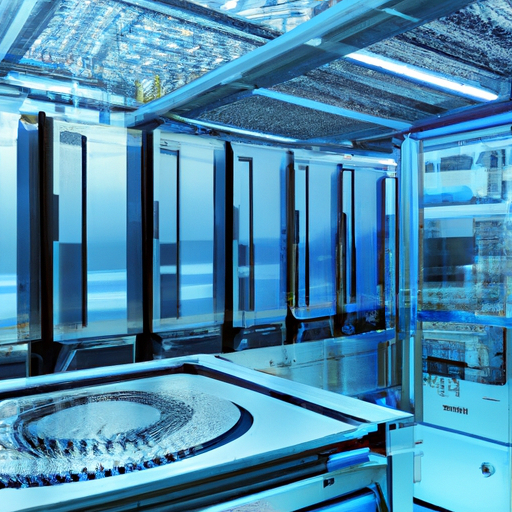
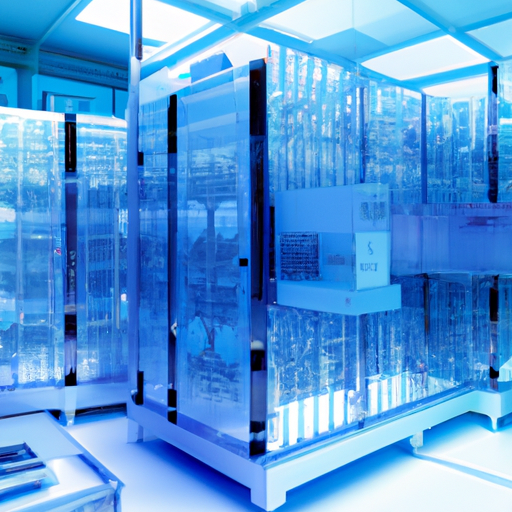
However, significant technical hurdles remain. Quantum computers require extreme cooling conditions, often operating at temperatures near absolute zero. Error correction remains a major challenge, as quantum states are inherently fragile and susceptible to environmental interference. Researchers are working on various approaches to address these issues, including topological quantum computing and error-correction algorithms.
The economic impact of quantum computing is projected to be enormous. Market analysts estimate that by 2030, the quantum computing market could reach $65 billion. Industries from pharmaceuticals to finance are investing heavily in quantum research and development, recognizing its potential to create competitive advantages.
The democratization of quantum computing is also underway. Cloud-based quantum computing services are making this technology accessible to researchers and businesses worldwide. IBM's Quantum Experience and Amazon's Braket are examples of platforms allowing users to experiment with quantum algorithms without needing direct access to quantum hardware.
Education and workforce development are becoming increasingly important as quantum computing advances. Universities are establishing quantum computing programs, and companies are investing in training programs to build the quantum workforce of the future. The demand for quantum computing specialists is expected to grow significantly in the coming years.
As we look to the future, the potential of quantum computing appears limitless. From solving complex optimization problems to revolutionizing artificial intelligence and machine learning, quantum computers could unlock solutions to challenges that have long seemed insurmountable. However, realizing this potential requires continued investment, research, and collaboration across academia, industry, and government.
The journey toward practical quantum computing is not just about technological advancement – it's about reimagining what's possible in computation and problem-solving. As we continue to make progress in this field, we're not just building more powerful computers; we're creating tools that could help address some of humanity's most pressing challenges.